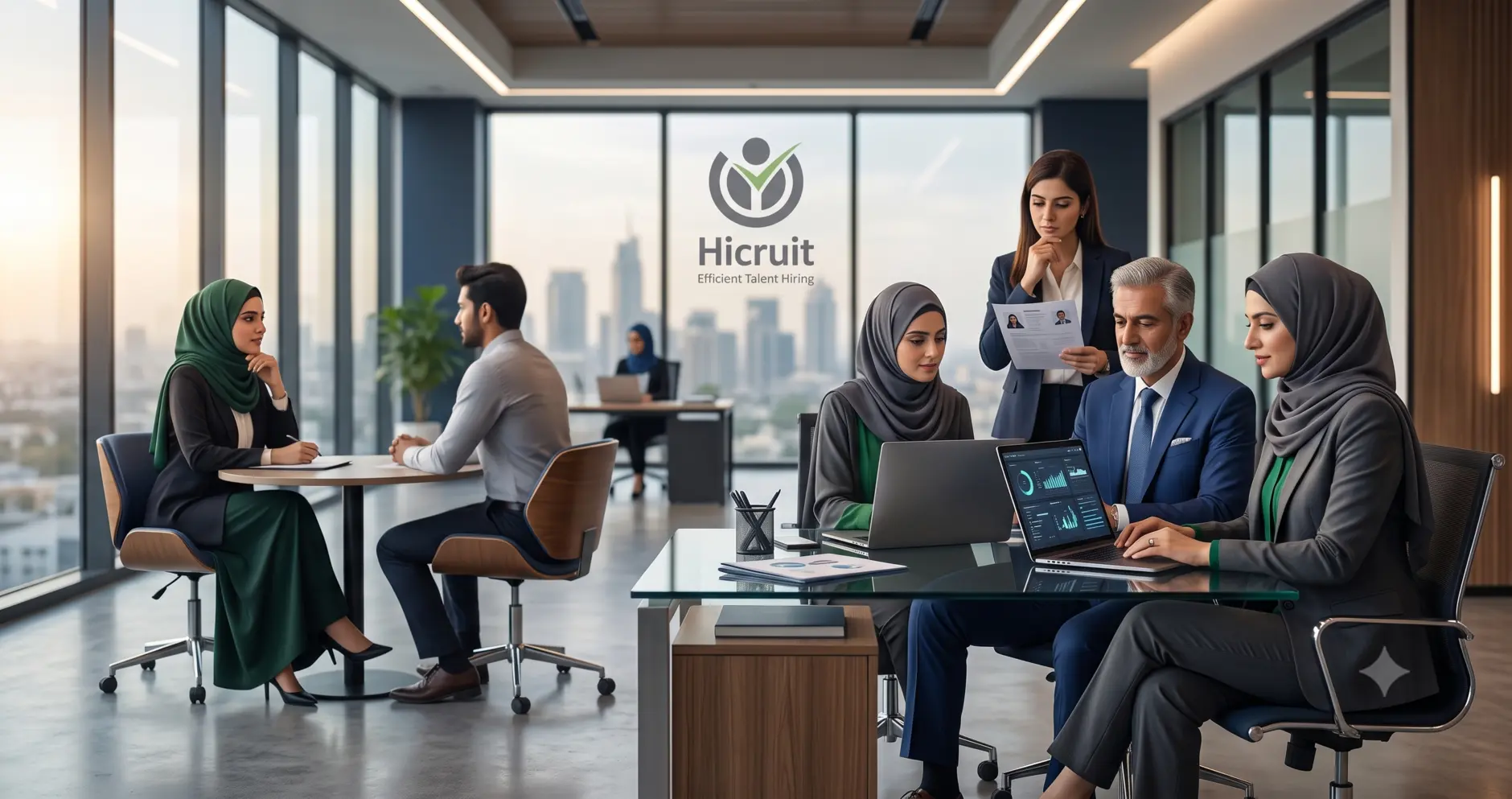
Recruitment teams in Pakistan are under pressure from both sides.
Employers want faster hiring, lower recruitment costs, and access to better talent. Candidates expect quicker responses, better communication, and fair hiring decisions.
Artificial intelligence promises to solve many of these challenges.
CV screening tools can process thousands of applications in minutes. AI assistants can draft job descriptions, rank candidates, schedule interviews, and answer applicant questions around the clock.
The question is no longer whether AI will influence recruitment in Pakistan.
It already does.
The more important question is whether organizations are using it wisely.
This guide explains how AI is changing recruitment across Pakistan, where it creates value, where it introduces risk, and how employers can adopt AI responsibly.
Table of Contents
- What Is AI in Recruitment?
- How AI Is Being Used in Recruitment in Pakistan
- Opportunities Created by AI Recruitment
- Risks and Challenges of AI Hiring
- AI vs Human Recruiters: What Works Best?
- How Pakistani Employers Should Approach AI Adoption
- The Future of AI Recruitment in Pakistan
- Frequently Asked Questions
What Is AI in Recruitment?
AI in recruitment refers to the use of machine learning, automation, and generative AI tools to support hiring activities.
These tools assist recruiters by automating repetitive tasks and improving decision-making.
Common applications include:
- CV screening
- Candidate sourcing
- Job description generation
- Interview scheduling
- Candidate engagement chatbots
- Skills matching
- Interview transcription
- Recruitment analytics
Importantly, AI should support hiring decisions rather than replace human judgment.
How AI Is Being Used in Recruitment in Pakistan
AI adoption in Pakistani HR departments remains at an early stage compared with North America and Europe, but adoption is growing rapidly.
Research published in Pakistan during 2025 and 2026 found increasing interest in AI-driven recruitment across industries including retail, IT, and corporate services. Organizations cited hiring efficiency, competitive pressure, and talent shortages as major reasons for adoption.
The strongest adoption is currently visible in:
- Technology companies
- Software houses
- BPO firms
- Large enterprises
- Multinational organizations
Common examples include:
- AI-assisted CV screening
- Automated interview scheduling
- AI-generated job descriptions
- Candidate database searches
- Recruitment reporting and analytics
Research examining HR communications in Pakistan found AI adoption expanding beyond experimentation into practical recruitment workflows and HR operations.
Opportunities Created by AI Recruitment
Faster Candidate Screening
Recruiters often spend hours reviewing applications for a single position.
AI systems can shortlist candidates based on predefined criteria within minutes.
This becomes particularly valuable for high-volume recruitment campaigns.
Improved Candidate Sourcing
Modern AI sourcing tools identify suitable candidates across:
- Job boards
- Professional networks
- Internal databases
- Talent communities
This expands recruiter reach beyond traditional channels.
Better Recruitment Analytics
AI tools can provide insights into:
- Time-to-hire
- Source effectiveness
- Candidate conversion rates
- Hiring bottlenecks
These insights help organizations make more informed decisions.
Reduced Administrative Work
Recruiters spend a significant amount of time on repetitive activities.
AI can automate:
- Interview scheduling
- Follow-up emails
- Candidate status updates
- Interview note generation
Industry surveys suggest many recruiters are already using AI primarily for efficiency and administrative support rather than decision-making.
Enhanced Candidate Matching
Traditional keyword searches often miss strong candidates.
Modern AI systems analyze:
- Skills
- Experience
- Career progression
- Transferable competencies
This can improve shortlist quality when configured properly.
Better Scalability During Growth
Rapidly growing companies often struggle with hiring volume.
AI tools allow smaller HR teams to manage larger recruitment pipelines without proportional increases in headcount.
Opportunity vs Risk Comparison
| Area | Potential Benefits | Potential Risks |
| CV Screening | Faster shortlisting | Missing qualified candidates |
| Candidate Sourcing | Larger talent pools | Algorithmic bias |
| Chatbots | Faster responses | Poor candidate experience |
| Analytics | Better decisions | Overreliance on data |
| Interview Analysis | Structured evaluation | Privacy concerns |
| Automation | Lower administrative burden | Reduced human interaction |
Risks and Challenges of AI Hiring
Algorithmic Bias
AI learns from historical hiring data.
If historical hiring decisions contain bias, AI may unintentionally replicate those patterns.
Recent legal cases involving recruitment technology providers have highlighted concerns around discrimination and fairness in automated hiring systems.
Missing High-Potential Candidates
Some candidates have unusual career paths, employment gaps, or non-traditional backgrounds.
Humans often recognize potential that algorithms overlook.
This risk is particularly important in emerging markets like Pakistan where career paths are often less linear.
Candidate Trust and Transparency
Candidates increasingly believe AI systems are making hiring decisions without human involvement.
Surveys show many candidates are uncomfortable with fully automated recruitment processes and expect human oversight.
Data Privacy Concerns
Recruitment involves highly sensitive information.
Organizations must carefully manage:
- CV data
- Interview recordings
- Assessment results
- Candidate communications
Poor governance creates legal and reputational risks.
Recruiter Skill Erosion
If recruiters rely too heavily on AI-generated recommendations, critical recruitment skills may weaken over time.
Recent research has highlighted concerns that recruiters may gradually lose sourcing and assessment expertise if AI becomes the primary decision driver.
Poor Candidate Experience
Automation can improve speed.
Poor automation creates frustration.
Candidates still value:
- Personal communication
- Interview feedback
- Human interaction
- Relationship building
These remain difficult to automate effectively.
AI vs Human Recruiters: What Works Best?
The debate is often framed incorrectly.
The choice is not between AI or recruiters.
The strongest hiring outcomes usually come from combining both.
| Recruitment Activity | AI | Human Recruiter |
| CV screening | Excellent | Moderate |
| Scheduling interviews | Excellent | Low efficiency |
| Building relationships | Limited | Excellent |
| Cultural assessment | Weak | Strong |
| Negotiation | Weak | Strong |
| Strategic hiring advice | Limited | Excellent |
| Employer branding | Limited | Strong |
AI excels at speed and scale.
Humans excel at judgment and relationships.
How Pakistani Employers Should Approach AI Adoption
Use AI for Administrative Work First
The safest starting point includes:
- Scheduling
- Reporting
- Candidate communication
- Data management
Keep Humans Responsible for Final Decisions
Hiring decisions should remain with experienced recruiters and hiring managers.
AI recommendations should be treated as inputs rather than conclusions.
Audit Recruitment Outcomes
Organizations should regularly review:
- Diversity outcomes
- Rejection patterns
- Candidate feedback
- Hiring quality metrics
Train HR Teams
AI adoption without training creates risk.
Recruiters need to understand:
- How tools work
- Their limitations
- Data quality requirements
- Bias mitigation practices
Maintain Transparency
Candidates appreciate honesty.
Inform applicants when AI tools support recruitment processes.
Transparency strengthens trust.
The Future of AI Recruitment in Pakistan
Over the next five years, AI adoption in recruitment across Pakistan will almost certainly increase.
Research shows organizations worldwide are accelerating investment in AI across sourcing, screening, and candidate communication workflows. Candidate use of AI during job searches is also increasing rapidly.
The likely future includes:
- Skills-based hiring
- AI-assisted interviewing
- Predictive workforce planning
- Personalized candidate experiences
- Better hiring analytics
The organizations that benefit most will probably be those that combine technology with strong recruitment fundamentals.
AI can improve hiring efficiency.
It cannot replace empathy, judgment, trust, and relationship building.
Those remain fundamentally human strengths.
Frequently Asked Questions
Is AI replacing recruiters in Pakistan?
No. AI is currently replacing repetitive administrative work rather than recruitment professionals themselves. Human judgment remains essential for interviews, negotiations, and cultural fit assessments.
Which Pakistani industries are adopting AI recruitment fastest?
Technology companies, software houses, BPO firms, financial institutions, and multinational organizations are currently leading adoption.
Can AI reduce recruitment bias?
Potentially yes, but only if systems are properly designed and monitored. Poor training data can actually increase bias.
Is AI recruitment expensive for small businesses?
Not necessarily. Many modern recruitment platforms offer affordable AI features for small and medium-sized businesses.
Should candidates worry about AI screening their CVs?
Candidates should optimize CVs for clarity, relevant skills, and measurable achievements, but most employers still involve human review at critical hiring stages.
Human Judgment Still Matters
Technology is changing recruitment, but successful hiring remains a people business.
Organizations that combine AI efficiency with experienced recruiters typically achieve stronger hiring outcomes than those relying entirely on either approach.
Hicruit offers practical recruitment, HR consulting, career development, and job search solutions that combine modern hiring tools with professional expertise to help businesses hire better and candidates build stronger careers in a technology-driven job market.